A brief look at the ins and outs of crofting
This is the fourth in our series of blogs on moving back to Uist. In this one we will look at Crofting and its role in everything from language and community to enriching Uist’s ecosystems – crofting is one of the most important cornerstones of life in Uist. It provides identity and purpose and a truly sustainable agricultural system which should be an example to the world.
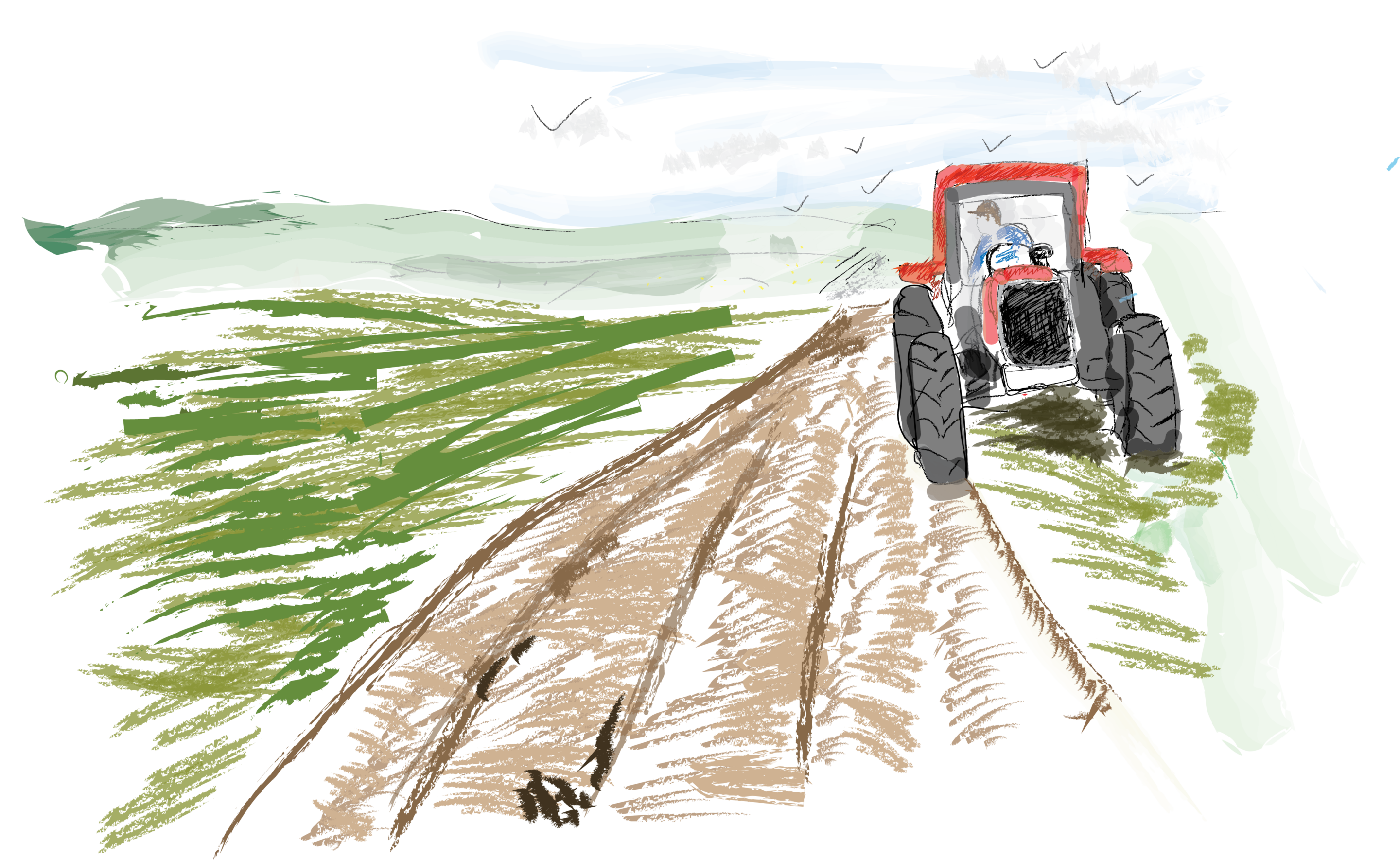
So, the basic question: What is a croft? It’s not a building! You often see houses described as crofts on the internet and in media; however, a croft doesn’t necessarily have to have a house on it. (I thought I’d get that one out of the way first). The Crofting Commission website defines a croft as a “relatively small agricultural land holding, normally held in tenancy.” While a croft doesn’t necessarily require a house on it, an individual should be ordinarily resident within 32km of the croft. It is also the duty of the tenant and owner-occupiers to maintain, cultivate and not neglected. The Crofter’s Holdings (Scotland) Act 1886 provided security of tenure and ensured that crofts could be passed on to the next generation. Before you embark on your crofting journey you should thoroughly research what is involved in the day-to-day running of a croft. This blog can be a jumping-off point for you but it is by no means an exhaustive exploration of crofting history and its cultural context. It is crucial that you understand the obligations of a crofter and the management of land and livestock before you begin. It should also be pointed out that most crofters also have other jobs outside of their croft business – the scale of production on crofts means that very few people can make a living off their croft alone. This is an essential factor to consider, but I would argue that having a croft does enrich your life and can add a sense of self-sufficiency when it comes to crops like potatoes and veg.
Crofting is a cornerstone of Uist’s communities and the year’s events are often tied to the crofting calendar. From the agricultural shows to Tractor Rallies to the livestock sales there are plenty of social occasions which stem from the practice of crofting. The agricultural shows are a real showcase of Uist’s crofting life, they are some of the best days out you can have during the summer. Even unofficial occasions like getting multiple generations of the family together to plant and then pick potatoes on the machair are special and many of us, including myself, cherish those memories. Uist’s collective resilience and resourcefulness could also be attributed to crofting and fishing: it was, and still is, hard work and you need to think on your feet to resolve issues that pop up. It also fosters a community spirit built on collaboration and cooperation; this is represented formally by common grazing committees. This is also true of fishing.
Crofting is also steeped in the Gaelic language with an incredible range of words and proverbs to describe anything from harvest to the different ages of cattle. If you want to really go down the rabbit hole, and I wholeheartedly encourage it, go to the Faclan bhon t-Sluagh section of the DASG website. In a way, it’s difficult for me to think about Gaelic in crofting as a discreet category since the entirety of my croft life has been conducted through Gaelic. I really think it’s where I’ve been the most consistent in my language use and generally very consistent. I am more likely to say Agh instead of Heifer or refer to a Ram as a Rùda (or Reithe…). My English agricultural vocabulary is a lot more limited than my Gaelic one…
The practices involved in crofting also play a crucial role in conserving the islands’ biodiversity. The traditional crofting practices, such as rotational grazing and the maintenance of species-rich machair habitats, provide a haven for rare and endangered species. Crofting is a kind of agriculture which works with the environment and without it, there is a chance that places like the machair would not be as rich and diverse in flora and fauna as they are. You may have seen David Attenborough’s Wild Isles documentary series where one episode had a feature on the importance of grazing by cattle to the diversity of wildflowers on the machair. NatureScot has information about the environment and crofting including links to advice on land management. Their blog section also has a fantastic article on crofting and the environment.
If you are new to crofting and you feel inspired by this post then your first port of call should be the Crofting Commission website. There you can find information and forms relevant to all aspects of crofting, Citizens Advice Scotland has also collated a list of handy links to more details here. I would recommend reading their guide if you are a bit stuck with where to start on the crofting commission website. The Scottish Crofting Federation is an invaluable resource and I would urge everyone involved with crofting to look at their website to find out how they work to represent and help crofters. They also have training opportunities to develop crofting skills and knowledge so keep an eye out for those.
I hope you found this short introduction to crofting interesting and helpful. Crofting is something that Uist is very proud of it is one of the most important strands in the tapestry of Uist life – entwined with Gaelic culture and our environment. It is a thriving part of our everyday life and is a fantastic example of sustainable, small-scale agriculture. It is a big step for someone new to the world of agriculture to think about taking on a croft but if you want to do it, I would say go for it (after you’ve done a bit of research beyond this blog)!
A Quick Gaelic to English Croft Glossary:
Croit – Croft
Taigh-croite – Croft House
Bò – cow
Laogh – Calf
Crodh – Cattle
Agh – Heifer
Gamhainn – Bullock
Tarbh – Bull
Caora – Sheep
Caoraich – Sheep (p)
Uan – Lamb
Rùda/ Reithe – Ram
Othaisg – Sheep aged between 5 and 12 months
Feur – Grass
Buntàta – Potatoes
Todhar – fertiliser
Todhar Gallta – Chemical Fertiliser
Bàthaich – Byre
Words and Illustration by Fiona MacIsaac for UistBeò